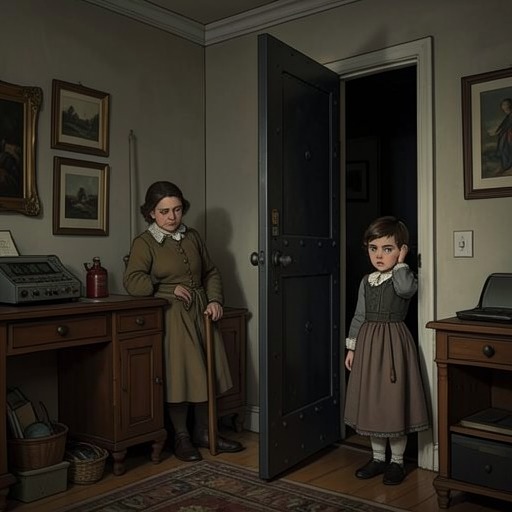
The Kingsleys’ failed cancellation-of-removal case
The Sun is Also a StarThe Kingsleys’ failed cancellation-of-removal case turns an immigration proceeding into a family crisis: a strategy built around Peter’s United States citizenship cannot prevent a judge from ordering the family to leave. Recounted by Natasha Kingsley while she seeks legal help, the case unfolds through missed opportunities, difficult eligibility rules, and shrinking choices. Its outcome is not only a legal defeat. It makes departure imminent for a teenager who has lived in the United States since she was eight and has no meaningful connection to the country she is expected to return to.
Exposure and the First Hearing
The legal process begins after Samuel Kingsley’s arrest. A few weeks later, the family receives a Notice to Appear from the U.S. Department of Homeland Security, exposing their undocumented status to the authorities. Natasha understands the arrest as the first link in a chain: her father’s drunk driving led to the family being discovered, and that discovery put her home in jeopardy. She objects that his mistake is his responsibility, yet the consequences reach his wife and children as well.
At the Master Calendar Hearing, only Natasha’s parents appear, and they do so without a lawyer. Natasha and Patricia Kingsley had discussed whether to pay for an attorney they could scarcely afford or wait to see what happened. Online accounts suggested counsel was not necessary at the initial hearing, while Samuel still believed the problem might somehow resolve itself. Their decision therefore combines financial constraint with hope, but it leaves them to navigate a consequential proceeding alone.
The judge presents the family with two paths: accept Voluntary Removal or file for Cancellation of Removal. Samuel does not accept voluntary departure at that hearing. The family instead turns to the possibility of cancellation, hoping that a legal remedy can keep them in the United States.
The Cancellation Strategy
The family’s hope rests in part on Peter, a United States citizen. He was born almost exactly nine months after the family moved to the United States, when his parents were still happy together. His citizenship becomes the possible legal foothold for the rest of the family, but it does not itself confer protection from removal on them.
After the first hearing, Patricia and Natasha research Cancellation of Removal. They understand that Samuel must have lived in the United States for at least ten years, demonstrate good moral character, and prove that his removal would cause extreme hardship to a spouse, parent, or child who is a United States citizen. They hire the cheapest lawyer they can find and go to the Merits Hearing with Peter’s circumstances as the center of their strategy.
The hardest requirement is extreme hardship. The family cannot establish that returning to Jamaica would put Peter’s life in danger. The emotional and psychological harm of uprooting a child from his home does not persuade the court; Natasha observes that even Peter himself does not recognize that danger. The case therefore exposes a gap between the family’s lived meaning of home and the narrow form of hardship they must prove. Peter’s citizenship gives them a basis to try, but the family’s distress at separation from the United States is not enough to satisfy the judge.
Denial and Voluntary Departure
At the Merits Hearing, the judge denies the case, and Samuel accepts Voluntary Removal. When Jeremy Fitzgerald later reconstructs the proceedings with Natasha, he states the outcome flatly, as though it had been inevitable. Natasha cannot bring herself to answer aloud; she nods, fearing that she will cry, while the hope she had been holding on to begins to recede.
Natasha had argued that the family should appeal. Their lawyer advised against it, saying they had no case and were out of options. The recommendation was to leave voluntarily rather than receive a deportation on their records, preserving at least the hope of returning one day. That distinction offers a possible future, not a way to remain now. Samuel’s acceptance of voluntary departure follows the failed merits case, while the family’s next decision is shaped by the prospect of avoiding a formal deportation record.
Natasha’s Last Attempts and the Case’s Consequences
The family’s adverse outcome is the immediate background to Natasha’s search for help. She goes to the United States Citizenship and Immigration Services building in downtown Manhattan on the day the family is due to leave, although that agency cannot provide the intervention she needs. Her desperation is not a belief in fate so much as a last attempt to find someone who can alter the result. At the Fitzgerald law office, Jeremy tells her that a judge would not overturn the Voluntary Removal, confirming that the case has not been rescued by another legal avenue.
For Natasha, the consequences are concrete and personal. She has lived in the United States since age eight, does not know her relatives in Jamaica in the way she understands family, and says she has no Jamaican accent. She is in her senior year and fears losing prom, graduation, and her friends. She has just begun assembling an application for Brooklyn College; Patricia has saved for two years to travel to Florida and buy a stolen-number Social Security card that could support an application for financial aid. Natasha also considers scholarships and in-state schools such as SUNY Binghamton. The deportation crisis interrupts these plans at the point when she is trying to build a future.
The case also explains why Natasha’s plea for help is so urgent: the family’s legal strategy has already failed, the appeal has been discouraged, and voluntary departure has not prevented the order’s practical consequence. Her account keeps the procedure and its human stakes in the same frame. A hearing’s standards determine the result, but the result reaches into a child’s education, friendships, family ties, and sense of home.